On this page
It is the first question almost every newcomer asks, and the honest answer is: skiing is usually easier to start, snowboarding is often easier to get good at. Both are brilliant, both are learnable at any age, and you can always try the other one later. Here is how to decide.
The short answer
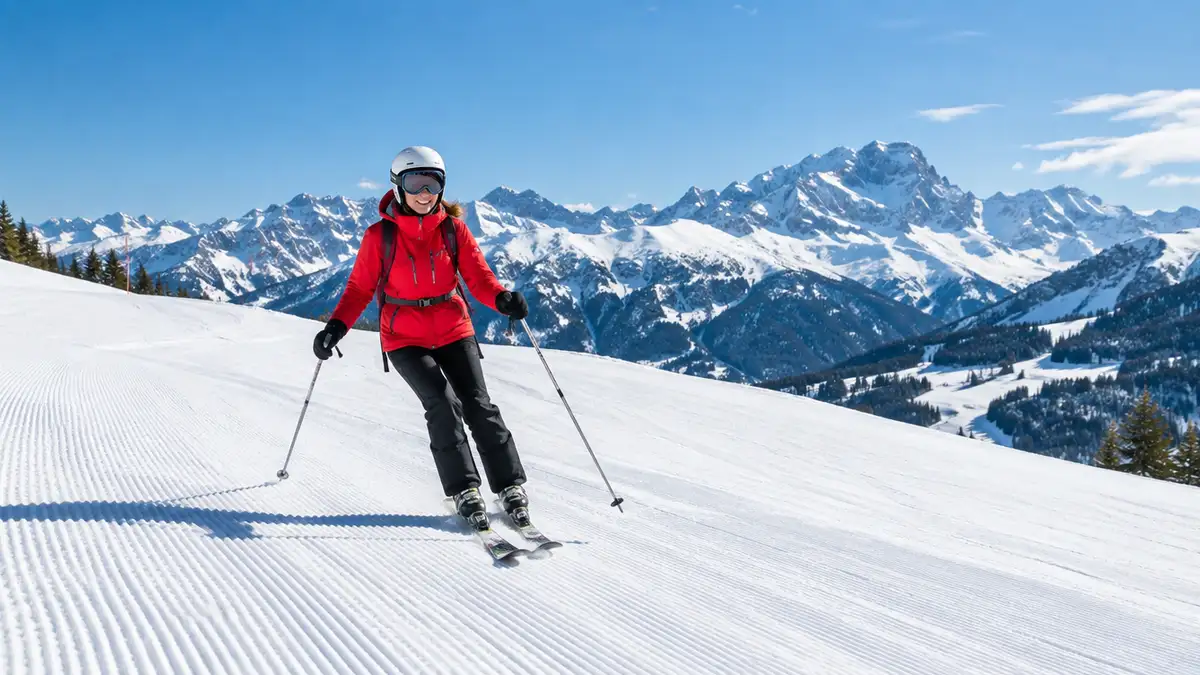
⛷️ Skiing
- Faster first day — most people are making controlled turns on a gentle slope by day 2
- Each leg moves independently, so walking and balancing feel natural
- Chairlifts and drag lifts are simpler
- The step from “intermediate” to “expert” takes longer
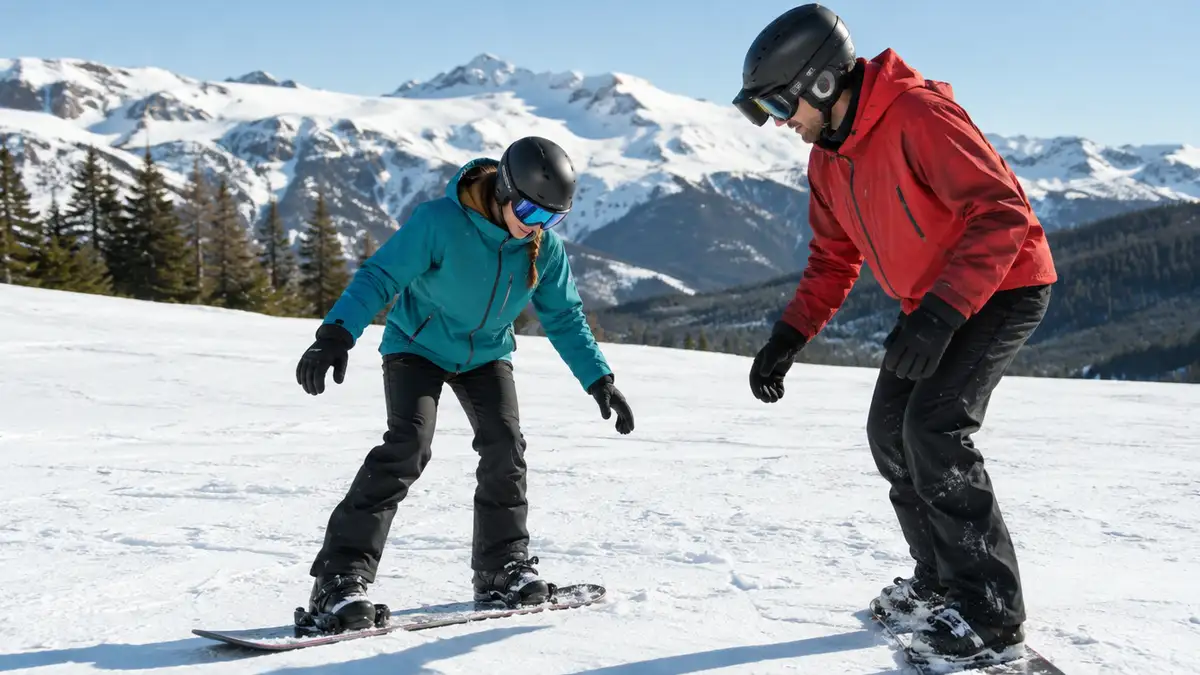
🏂 Snowboarding
- Harder first 2–3 days — expect to fall a lot, mostly on your backside and wrists
- Once it “clicks” (often around day 3–5), progress is fast
- Softer, more comfortable boots
- Flat sections and drag lifts are awkward
Learning curve: the first week compared
Instructors often describe skiing as easy to learn, hard to master and snowboarding as hard to learn, easy to master. That is a simplification, but it matches what most beginners experience:
| Day | Typical skier | Typical snowboarder |
|---|---|---|
| Day 1 | Walks on skis, glides, stops with a snowplough (“pizza”) | Learns to strap in, side-slips, falls often |
| Day 2 | Links snowplough turns on a green or easy blue run | Falling leaf on the heel and toe edge |
| Day 3 | Rides chairlifts, explores easy blues | First linked turns — the big breakthrough |
| Day 4–5 | Starts bringing skis parallel | Linked turns on blues, getting confident |
| Day 6+ | Parallel turns on blues, first reds | Often catches up with skiers, rides reds |
Of course, everyone is different. Fitness, confidence, snow conditions and — above all — good instruction make a much bigger difference than the choice of sport.
Who usually finds skiing easier?
- Nervous beginners. Facing forward with a leg on each side feels more stable, and the snowplough gives you an easy “brake” from the very first hour.
- People with sensitive wrists, tailbones or knees who want fewer falls in the first days (although skiers do have a higher rate of knee injuries later on).
- Families with small children. Kids can start skiing from about age 3–4; most schools only teach snowboarding from 6–8.
- Anyone on a short trip. If you only have 2–3 days, you will likely see more of the mountain on skis.
- Future cross-country or ski-touring fans. Skills transfer well.
Who usually finds snowboarding easier?
- Surfers, skaters and wakeboarders. The sideways stance and edge control will feel familiar.
- Teens and young adults who don’t mind a few tough days of falling.
- People who hate heavy, stiff boots. Snowboard boots are soft and walkable.
- Powder and park lovers. Boards float effortlessly in deep snow and are a natural fit for the terrain park.
Cost: is one cheaper?
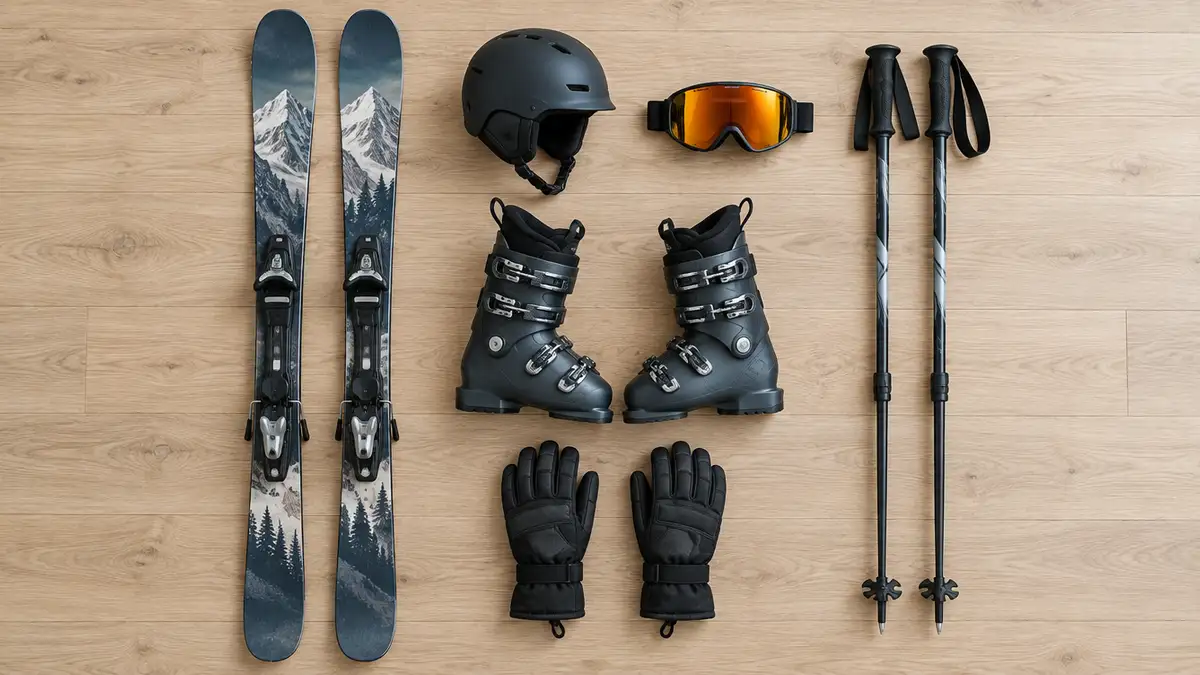
Not really. Lift passes, lessons and clothing cost the same. Rental prices for a ski package (skis, boots, poles) and a snowboard package (board, boots, bindings) are almost identical at most resorts. Snowboarders do benefit from buying wrist guards and padded shorts, which adds a small amount to the budget. See our ski trip budget guide for real numbers.
Injuries and safety
Both sports are safe when you ride within your ability, but the typical injuries are different:
- Skiers are more likely to injure a knee (especially the ACL) because long skis can twist the leg in a fall.
- Snowboarders are more likely to injure a wrist, shoulder or tailbone because they instinctively put their hands out when they fall.
Wear a helmet in either sport, and read our guide to common injuries and how to avoid them.
Can I switch later?
Absolutely. Many people learn to ski first, then try snowboarding a season or two later (or vice versa). Your mountain sense — reading terrain, riding lifts, understanding the skier code — carries over completely. Only the technique is new.
Still undecided? Book a half-day lesson in each on the first two days of your trip. Many ski schools offer “try both” packages, and your body will tell you which one feels more fun.
Key takeaways
- Skiing is usually easier for the first 2–3 days; snowboarding often speeds up after that.
- Choose skiing for short trips, young kids and nervous beginners.
- Choose snowboarding if you surf/skate, love powder or hate stiff boots.
- Whatever you choose, take lessons for the first days — it’s the single biggest shortcut.
Frequently asked questions
Is skiing or snowboarding easier for adults?
Most adult beginners find skiing easier during the first two or three days because the stance feels natural and stopping is simple. Snowboarding is harder at first but many adults progress quickly once linked turns click.
Which is better for kids?
Skiing, for young children. Ski schools usually accept children from age 3–4 for skiing, while snowboard lessons typically start around 6–8 years old.
Is snowboarding more dangerous than skiing?
Overall injury rates are similar. Snowboarders more often injure wrists and shoulders, skiers more often injure knees. Wrist guards and a helmet greatly reduce risk.
How many days does it take to learn?
With lessons, most people can ride an easy slope safely after 2–3 days of skiing or 3–4 days of snowboarding.