On this page
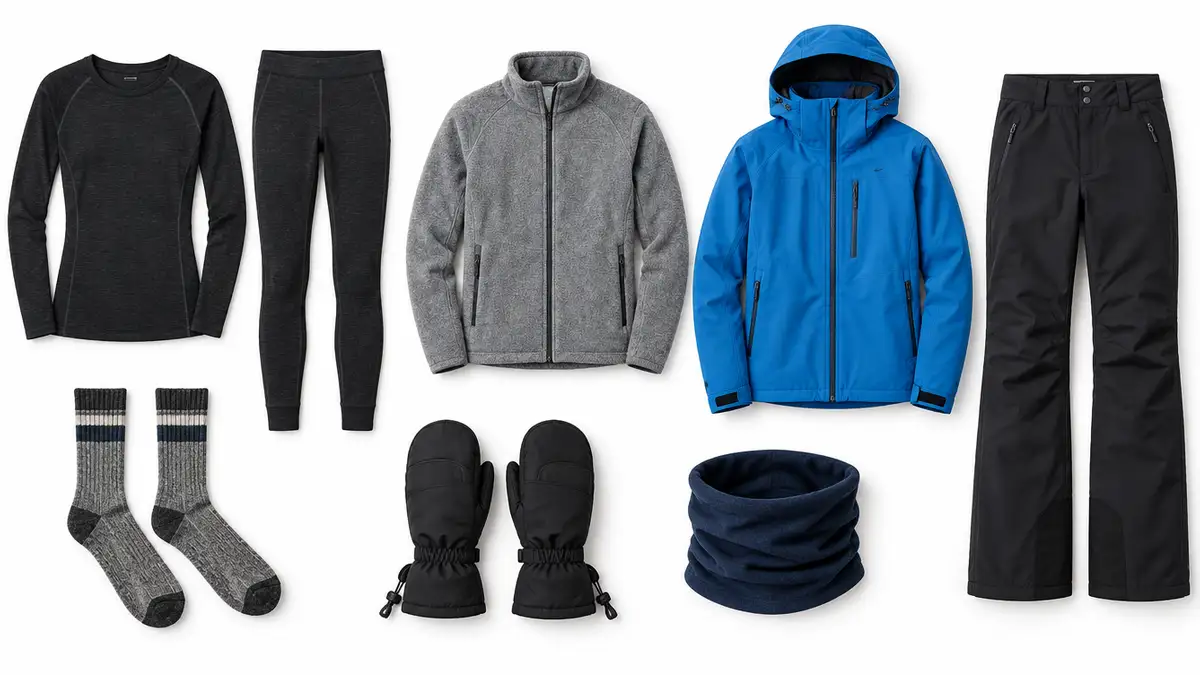
The layering system is the most important clothing concept in winter sports. Each layer has a job, and together they keep you warm, dry and comfortable whatever the weather does.
Layer 1: the base layer (thermal underwear)
Job: move sweat away from your skin (“wicking”) so you stay dry — and therefore warm.
- Merino wool: warm even when damp, soft, naturally odour-resistant (you can wear it several days). More expensive and less durable.
- Synthetic (polyester, polypropylene): dries fast, cheap and durable, but gets smelly.
- Blends: a good compromise.
- Fit: close to the body, not tight.
- Never cotton: it holds moisture and chills you.
Weights: light (150 g/m² — spring, active days), mid (200 g/m² — most skiers), heavy (250+ g/m² — very cold days).
Layer 2: the mid layer (insulation)
Job: trap warm air. This is the layer you add or remove according to the temperature.
- Fleece: breathable, cheap, warm when damp. The classic choice.
- Synthetic insulated jacket (“puffy”): warm, compressible, OK when damp.
- Down jacket: the warmest for its weight; loses warmth when wet. Great for very cold days under a shell.
- Merino or wool jumper: works fine too.
Layer 3: the outer layer (shell)
Job: block wind, snow and water — while letting sweat vapour out.
- Shell jacket: no insulation, just a waterproof membrane. Very versatile when combined with mid layers.
- Insulated ski jacket: shell with padding built in. Simpler for beginners; can be too warm in spring.
- 3-in-1 jackets: a shell with a zip-in fleece — good value.
- Look for: a powder skirt, helmet-compatible hood, pit zips (vents), ski pass pocket on the left sleeve, goggle pocket.
What the waterproof numbers mean: see membranes and ratings.
Legs
A base layer legging plus waterproof ski trousers (padded or shell) is enough for most days. On very cold days add a thin fleece legging. Salopettes/bibs (with bib and braces) keep snow out when you fall — very useful for beginners and snowboarders.
What to wear at different temperatures
| Temperature | Top | Bottom |
|---|---|---|
| Below −15 °C | Heavy base + fleece + down/insulated + shell | Base + fleece legging + insulated trousers |
| −15 to −5 °C | Mid base + fleece + insulated jacket or shell with puffy | Base + insulated trousers |
| −5 to +2 °C | Mid base + light fleece + shell/insulated jacket | Base + ski trousers |
| Above +2 °C (spring) | Light base + shell, open vents | Light base or none + shell trousers |
Beginner tip: you’ll sweat more than you expect while learning (lots of effort, lots of getting up). Dress slightly cooler than you think and keep a light puffy or fleece in a backpack or tied round the waist.
Head, hands, feet
Extremities get cold first. Read gloves, socks and balaclavas. Under a helmet, a thin beanie or balaclava is enough; the helmet itself is warm.