On this page
Snowboarding has a steeper learning curve than skiing for the first couple of days — but when it clicks, it really clicks. Here’s the progression you’ll follow.
1. Regular or goofy?
Your stance is which foot goes forward:
- Regular — left foot forward (most common).
- Goofy — right foot forward.
Quick tests: which foot do you step forward with when someone gently pushes you from behind? Which foot do you lead with when sliding on a slippery floor in socks? If you skate or surf, use the same stance. If unsure, your instructor will help — and you can swap on day one if it feels wrong.
2. Get to know the board
- Nose and tail — the front and back.
- Heel edge and toe edge — you’ll use these to control speed and turn.
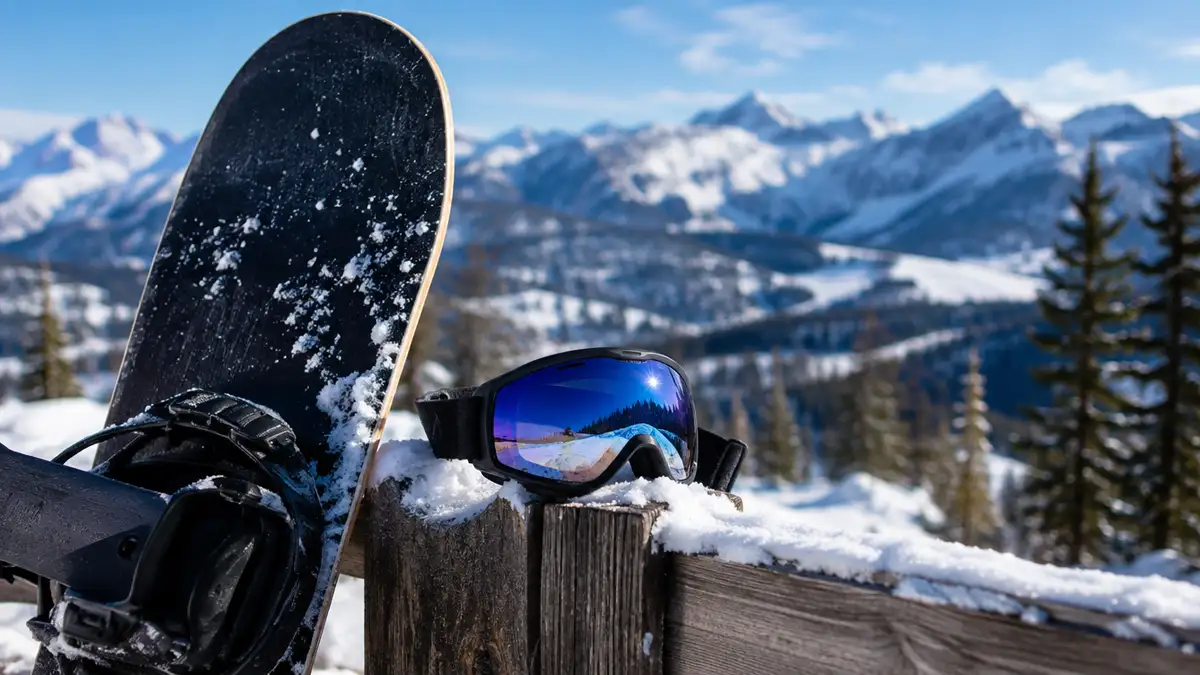
- Bindings — straps over the ankle and toes and a high-back. Beginners usually use a “duck” or slightly forward stance angle set by the rental shop.
- Leash — some resorts require it to stop runaway boards.
Never leave your board lying base-down on a slope — it can slide away and injure someone. Place it bindings-down in the snow.
3. Strapping in and skating
- Sit down across the slope with the board downhill of you.
- Strap in your front foot first (ankle strap, then toe strap), heel pushed back into the binding.
- For moving on flat ground and getting to lifts, keep only the front foot strapped in and push with your back foot like on a skateboard (“skating”). Keep the back foot close to the board.
- Only strap in the back foot when you are ready to slide down.
4. Standing up
- From the heel side: sitting facing downhill, dig the heel edge in, pull your knees to your chest, grab the toe edge and push up with your front hand. Keep the board across the slope.
- From the toe side: kneeling facing uphill, push yourself up with your hands. Many beginners find this easier.
5. Side-slipping (heel edge)
This is the snowboarder’s brake and the base of everything.
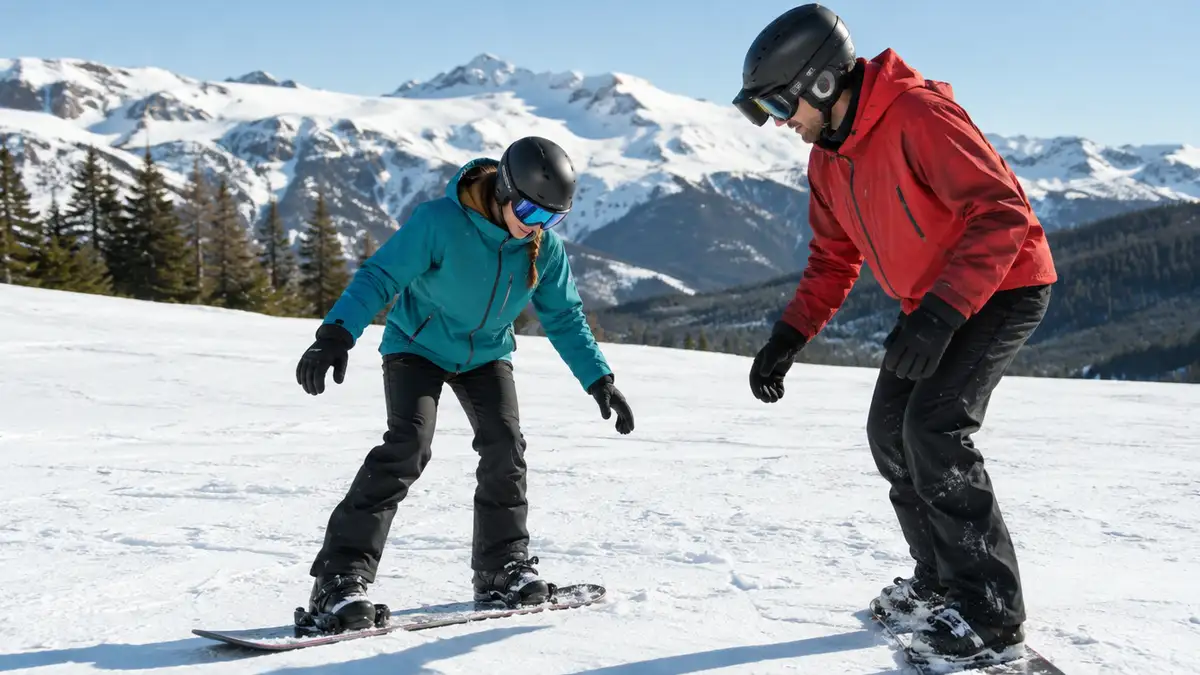
- Stand facing downhill, board across the slope, knees bent, weight evenly on both feet.
- Gently lower your toes so the heel edge releases a little and you slide straight down.
- Lift your toes again to dig in the edge and stop.
Then practise the same on your toe edge, facing uphill. Keep your eyes up and your back straight.
6. The falling leaf
While side-slipping, shift weight gently onto your front foot and the board glides that way; shift to the back foot and it glides the other way — like a leaf zig-zagging to the ground. Practise on both heel and toe edges. This teaches you to steer with weight and look where you’re going.
7. First turns (the “garland” and linked turns)
- Garlands: from the falling leaf, let the nose point a little more downhill, then bring it back across the slope. You are making half-turns on the same edge.
- Heel-to-toe turn: as the board points downhill, slowly shift weight to your front foot, rotate your shoulders and look in the new direction, and gently press your toes down. The board will come around onto the toe edge.
- Toe-to-heel turn: the same, but lift your toes and sit slightly as if onto a chair.
- Link them into an S-shape. Your first linked turns are one of the best feelings in snow sports!
Key secret: front foot pressure. Beginners instinctively lean back when the board points downhill — it makes turning impossible. Commit to the front foot.
8. Falling safely
- Backwards: sit down, tuck your chin, keep arms in and fists closed.
- Forwards: go down onto your knees and forearms.
- Never put out stiff, straight arms. Wear wrist guards, and consider padded shorts for the tailbone.
9. Drag lifts and chairlifts on a board
Only your front foot is strapped in. On drag lifts, keep your back foot against the rear binding and your weight on the front foot. Chairlifts: sit, put the board forward, and exit with your back foot on the stomp pad. Details: how to use lifts.
Realistic expectations
- Day 1: stance, skating, side-slip on the heel edge. Lots of falls.
- Day 2: falling leaf on both edges, first garlands.
- Day 3: first linked turns on a gentle slope.
- Day 4–5: linked turns on greens and easy blues, chairlifts.
Frequently asked questions
How do I know if I am regular or goofy?
Regular riders lead with the left foot, goofy with the right. Try which foot you naturally step forward with when pushed from behind, or which you lead with when sliding in socks.
Why do snowboard beginners fall so much?
Because the board has two edges and it is easy to catch the downhill one. Practising side-slips and the falling leaf, keeping weight on the uphill edge and wearing wrist guards reduces falls and injuries.