On this page
Buying everything at once is expensive and often wasteful — beginners’ needs change quickly. Here is the order most instructors and experienced skiers recommend.
Step 1: before your first trip
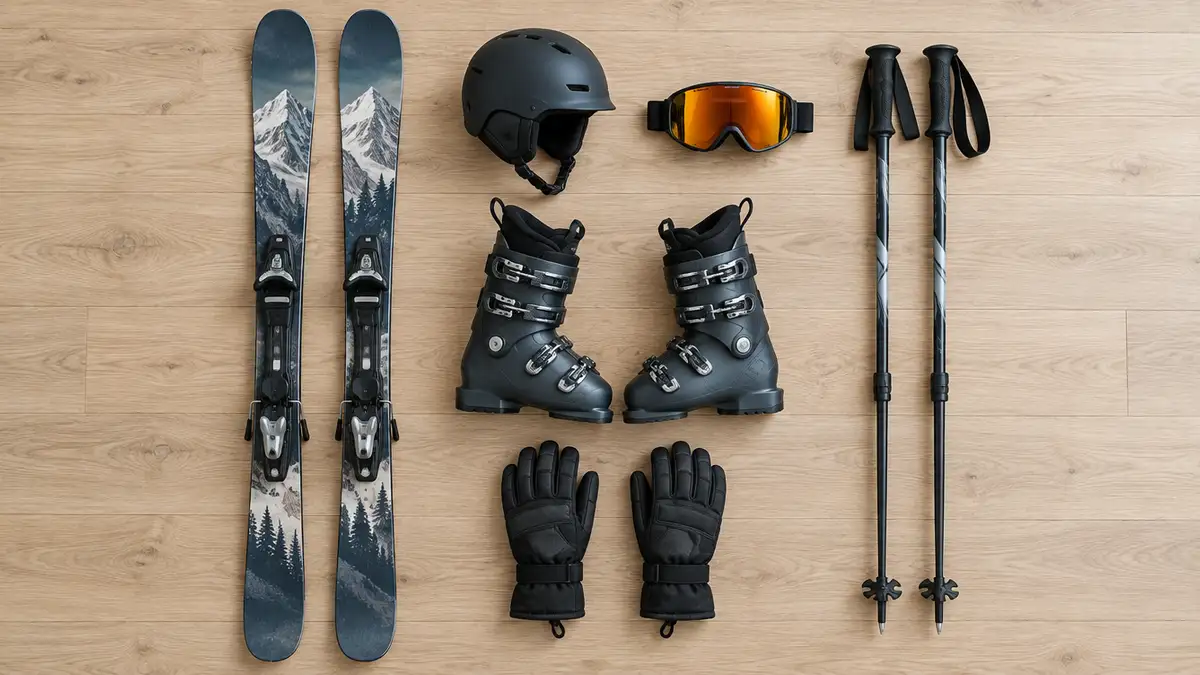
- Goggles — personal, affordable, and rental goggles are often scratched.
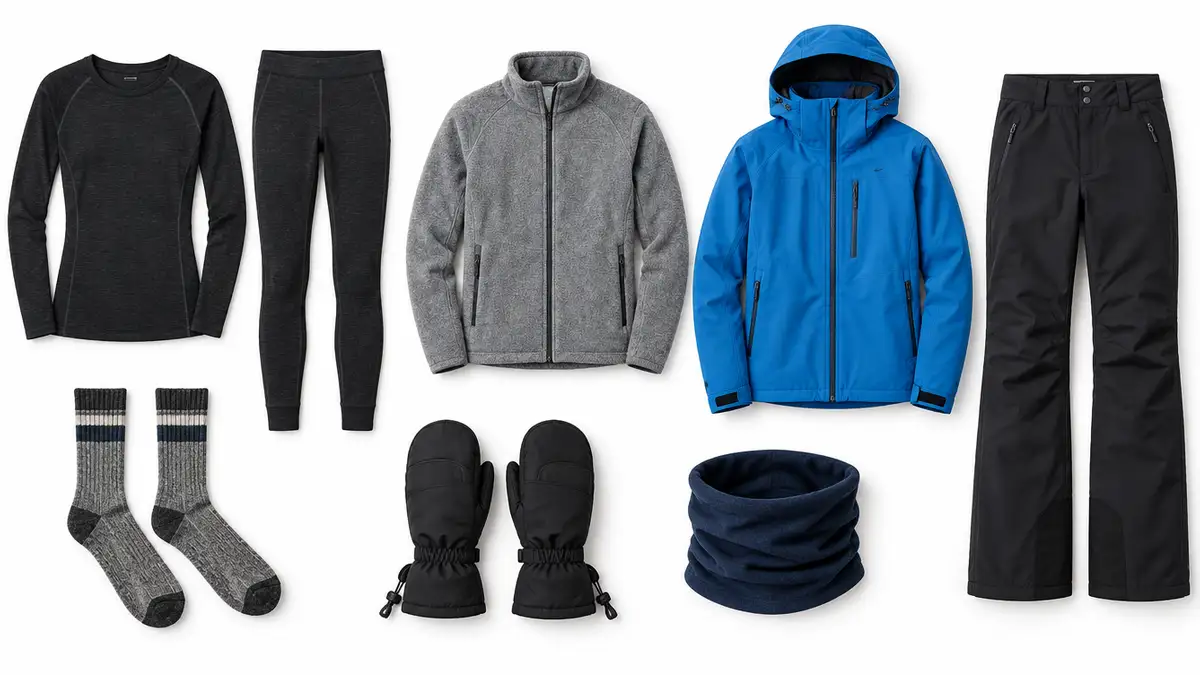
- Gloves or mittens — must be waterproof. See gloves guide.
- Thermal base layers — top and leggings.
- Ski socks — 2–3 pairs.
- Neck warmer / buff.
- Helmet — optional to buy, but hygienic and better fitting.
- Jacket and trousers — buy, borrow or rent.
- Wrist guards for snowboarders.
Step 2: after 1–2 trips — boots
If you’ve caught the bug, boots are the best upgrade. Rental boots are packed out and shaped by thousands of feet; your own, fitted by a professional, give comfort and control that nothing else does. They are also easy to travel with.
Step 3: when you ski 10+ days a year — skis or snowboard
Once you know which terrain you enjoy and your technique is stable, buy skis or a board. Demo before buying. End-of-season sales (March–May) offer big discounts.
What to keep renting
- Skis or board — if you ski less than a week per year.
- Kids’ equipment — children grow every season. Many shops offer seasonal kids’ rental.
- Specialist gear — touring kit, avalanche equipment, snowshoes.
Buying second-hand
- Good second-hand buys: jackets, trousers, skis less than 5 years old (have the bindings checked), snowboards.
- Avoid second-hand: helmets (unknown impacts), boots (moulded to someone else), very old bindings (may no longer be certified for adjustment).
| Priority | Item | Rough budget |
|---|---|---|
| 1 | Goggles | €30–120 |
| 1 | Gloves / mittens | €25–80 |
| 1 | Base layers | €30–100 |
| 2 | Helmet | €50–150 |
| 2 | Jacket + trousers | €120–400 |
| 3 | Boots (with fitting) | €200–500 |
| 4 | Skis with bindings / snowboard with bindings | €300–900 |
Indicative price ranges for entry-level to mid-range gear.