On this page
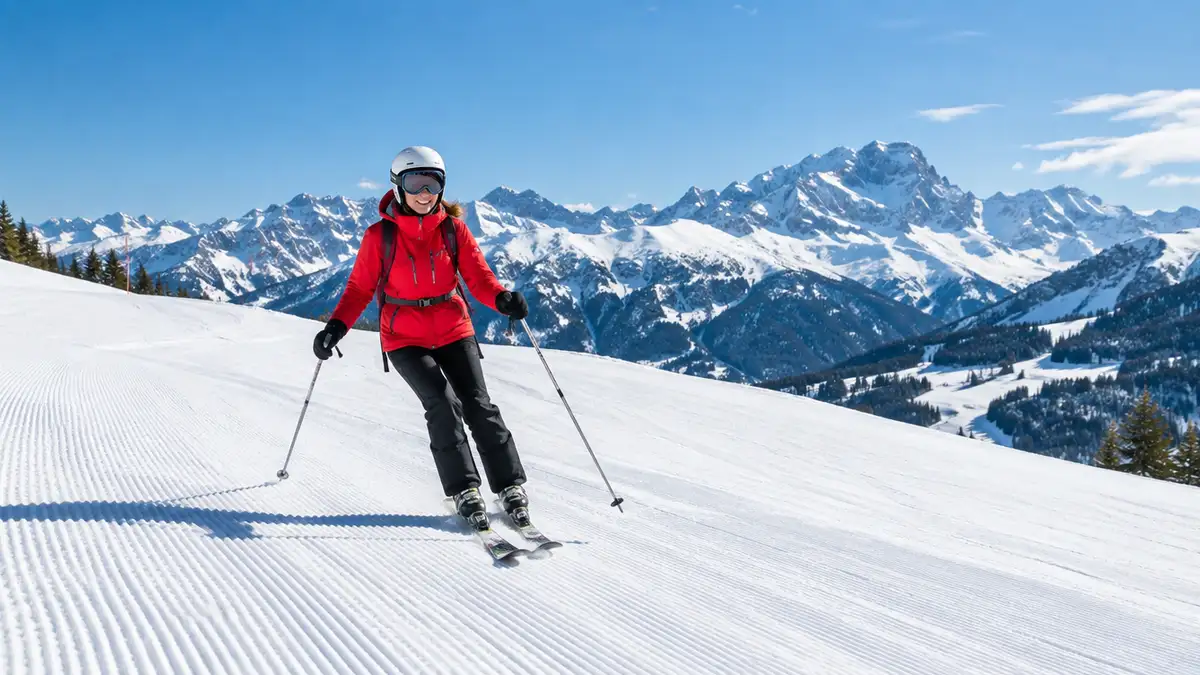
A week is the classic length of a first ski holiday, and it is a great amount of time: long enough to go from zero to confidently exploring easy runs. This plan assumes a morning group lesson each day, but works with private lessons too.
Everyone progresses differently. If you’re behind the plan, that’s fine — repeat a day. If you’re ahead, enjoy it, but don’t skip rest.
Day 0: arrival
- Pick up rental equipment the evening before — shops are quieter.
- Check your ski school meeting point and time.
- Walk around the base area, locate lifts, lockers and the nursery slope.
- Drink water, eat well, sleep early. If you’re at altitude, take it easy. See altitude tips.
Day 1: foundations
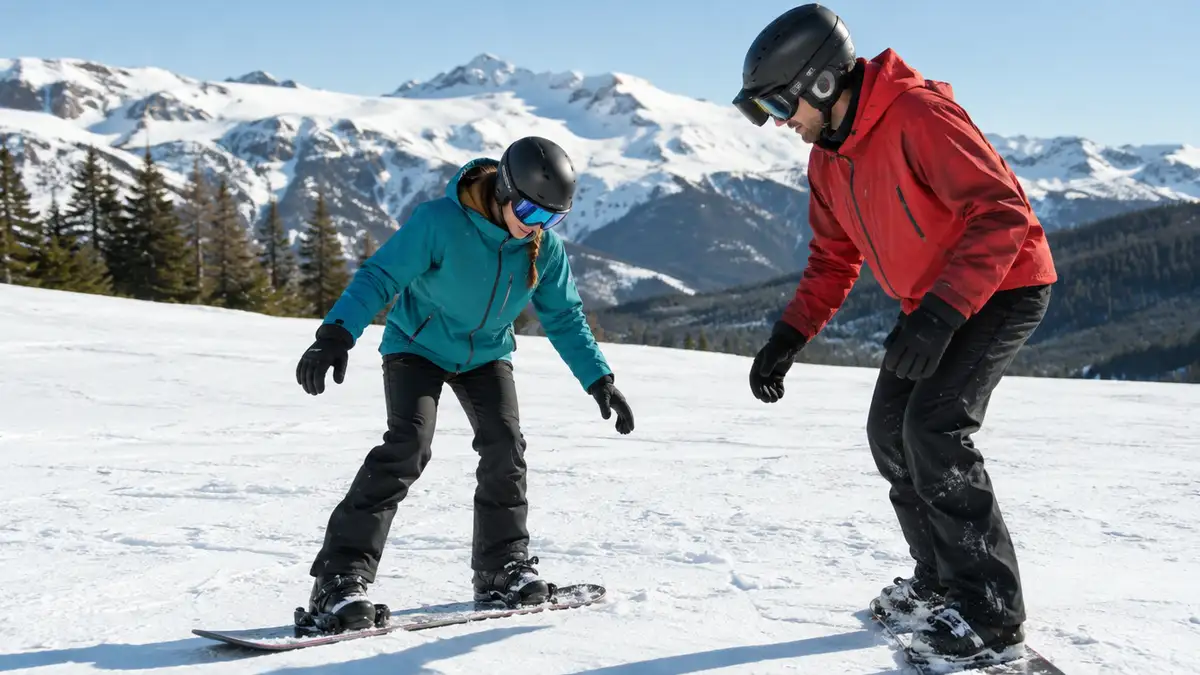
Skiers: putting skis on and off, walking, gliding, snowplough stop, first magic carpet. Snowboarders: stance, strapping in, skating, heel-edge side-slip.
Afternoon: practise on the nursery slope for an hour, then stop. Stretch in the evening.
Day 2: first turns
Skiers: snowplough turns, linking them, first drag lift. Snowboarders: toe-edge side-slip, falling leaf on both edges.
Expect sore thighs (skiers) or sore wrists and bum (snowboarders). Totally normal.
Day 3: leaving the nursery
Skiers: first green or easy blue run, first chairlift, controlling speed through turn shape. Snowboarders: garlands, first linked turns on a gentle slope.
This is often the “breakthrough day”. Celebrate it!
Day 4: rest or half day
Muscles are tired by day 4, and most injuries happen when fatigue sets in. Consider a half day — lesson in the morning, then spa, snowshoeing, skating or a sightseeing gondola ride in the afternoon.
Day 5: mileage on blues
Skiers: longer runs on easy blues, skis starting to come parallel on the traverse. Snowboarders: linked turns on greens and easy blues, chairlifts, cat tracks.
Afternoon: ski the runs from your lesson again with friends or family.
Day 6: consolidation
A “tour” day with your instructor — linking several runs, maybe a lift to a mountain restaurant for lunch. Some schools finish with a mini race or a video analysis. You might try a short red run if conditions are perfect.
Daily routine that works
| Time | Activity |
|---|---|
| Morning | Warm-up (5 minutes of leg swings and squats), lesson |
| Lunch | Proper meal, water, 45–60 minutes of rest |
| Afternoon | 1–2 hours of practice on known runs |
| Before 15:30 | Stop while you still have energy |
| Evening | Stretch, dry gloves and boots, early night |
What if the weather is bad?
- Snowing / flat light: stay on runs near trees where you can see contours better. Use a low-light goggle lens (see lens guide).
- Very cold: shorter sessions, more breaks, warm drinks. Watch for frostbite signs.
- Strong wind: upper lifts may close; beginner areas usually stay open.
After the week
Most beginners finish their first week able to ski or ride blue runs with controlled turns. The next step is parallel turns and red runs — often on your second trip.