On this page
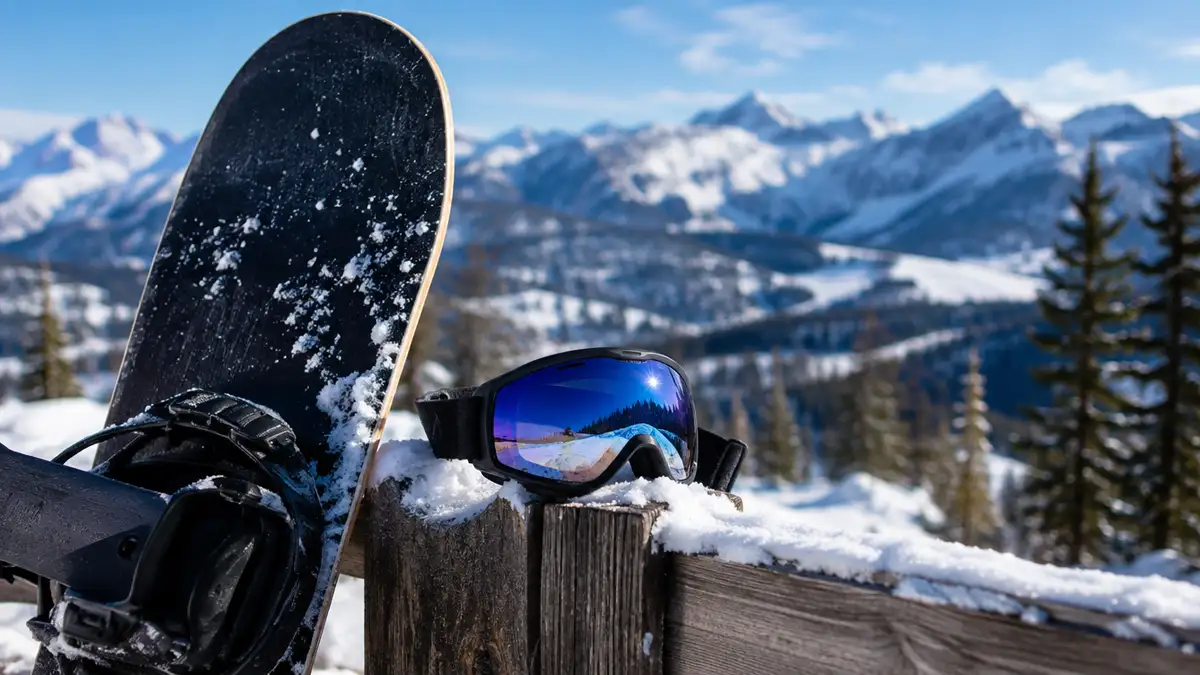
Goggles protect your eyes from UV, wind, snow and branches — and let you actually see the bumps in the snow. Sunglasses are fine on warm spring days, but goggles are the better choice for learners.
Why goggles matter
- UV radiation increases with altitude and is reflected by snow — risk of snow blindness (a painful sunburn of the eye).
- They stay on during falls.
- They show contrast in flat light, when it’s hard to see the snow surface.
- They keep your face warm.
Lens categories (VLT)
VLT (visible light transmission) is the percentage of light the lens lets through. Lenses are often labelled by category S0–S4:
| Category | VLT | Conditions | Typical colours |
|---|---|---|---|
| S0–S1 | 43–100% | Snowfall, fog, flat light, night skiing | Clear, yellow, pink, light rose |
| S2 | 18–43% | Variable / partly cloudy — the best all-rounder | Orange, amber, rose, light mirror |
| S3 | 8–18% | Sunny days | Dark grey, brown, mirror |
| S4 | 3–8% | Extreme sun, glaciers | Very dark mirror (not legal for driving) |
If you buy one lens: choose S2 (orange/rose) — it works in most conditions. Better still, choose goggles with an easily swappable second lens for bad weather.
Other lens features
- Photochromic lenses darken in sunlight automatically — convenient but pricier.
- Polarised lenses reduce glare, though some skiers feel they hide icy patches.
- Contrast-enhancing lens tints help you read the terrain.
- Cylindrical (flat horizontally) vs spherical (curved both ways — wider view, less distortion) vs toric (in-between).
- 100% UV protection — standard, but check.
Fit
- Try goggles with your helmet: no gap on the forehead, no pressure on the nose.
- The foam should seal all around your face.
- Medium, small (kids/narrow faces) and large frames exist.
- OTG (over-the-glasses) goggles have space for prescription glasses. Contact lenses are an easier alternative.
How to stop goggles fogging
- Don’t push goggles up onto your forehead — heat and sweat rise into them.
- Don’t cover the top vents with a hat or neck warmer.
- Keep moving; fog forms when you’re stationary and hot.
- Never wipe the inside of the lens — it removes the anti-fog coating. Let it dry instead.
- Store in the soft bag, not in a wet pocket.