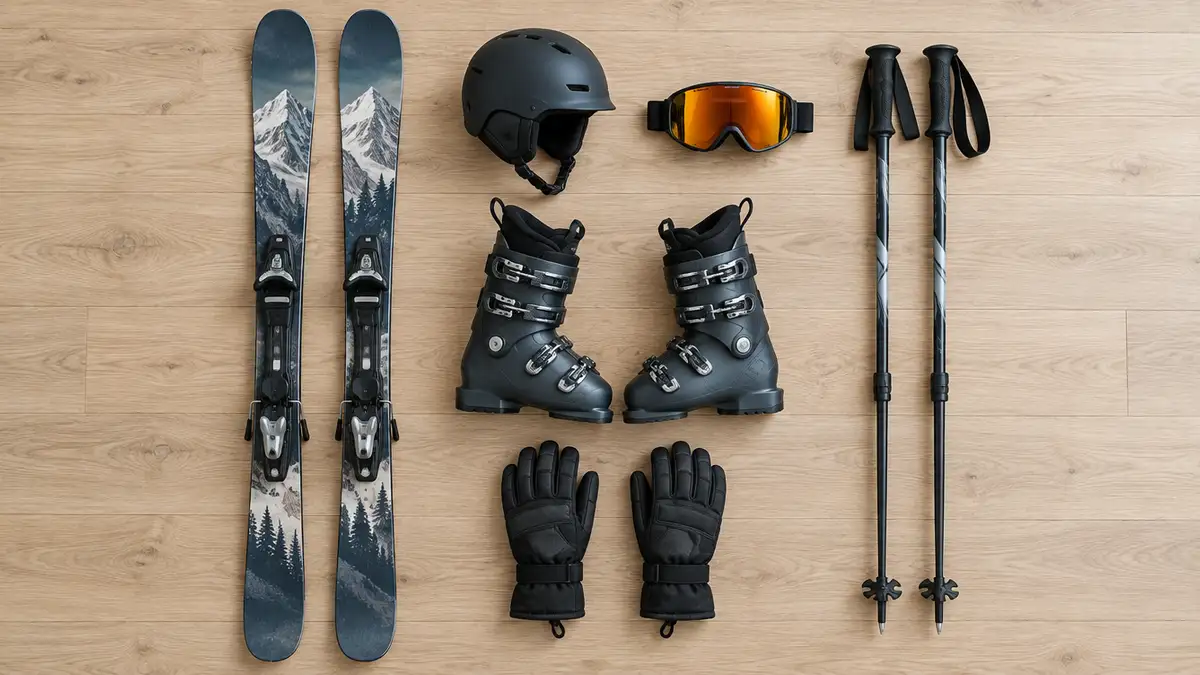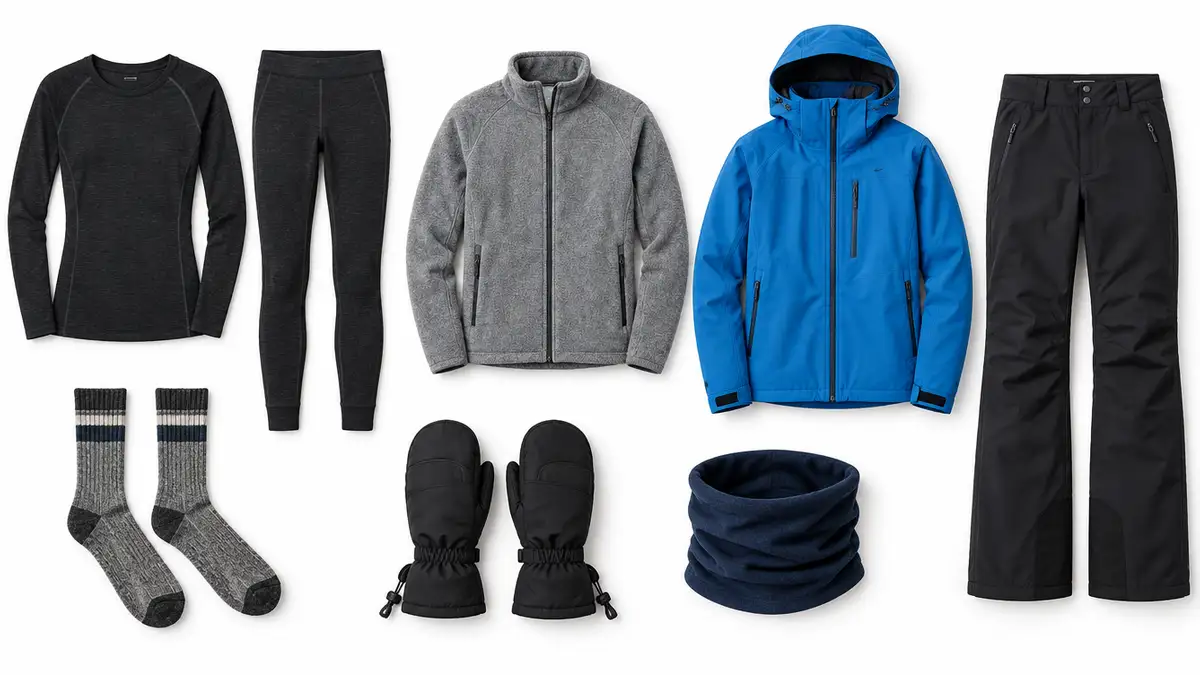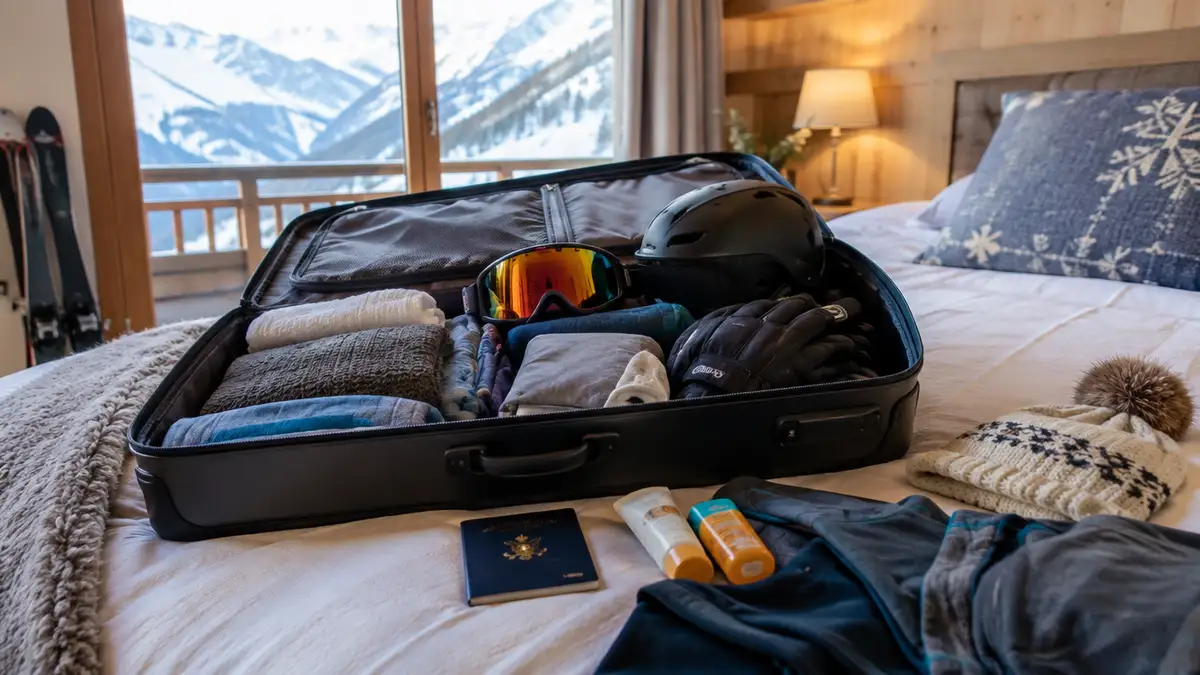
You don’t need expensive brands to be warm and dry. A complete, perfectly good beginner outfit can cost a fraction of what you see in resort shops.
Where to save
- Sports discount chains and supermarkets sell basic ski jackets, trousers and base layers every autumn at low prices.
- Second-hand marketplaces — ski clothing is often barely used. Check that membranes aren’t peeling and zips work.
- End-of-season sales (March–April) and outlet stores.
- Borrow jackets and trousers from friends for the first trip.
- Clothing rental at resorts or online — growing in popularity.
- Use what you already have: running or hiking base layers, a fleece, a buff.
Where NOT to skimp
- Gloves: must be waterproof. Cheap non-waterproof gloves = frozen hands on day one.
- Ski socks: proper thin, long ski socks prevent blisters.
- Goggles: with 100% UV protection; cheap goggles are fine if they fit your helmet.
- Helmet: rent if the budget is tight, but always wear one.
Example budget outfit
| Item | Budget option | Approx. price |
|---|---|---|
| Ski jacket | Entry-level insulated, 10K | €40–80 |
| Ski trousers | Entry-level, 10K | €30–60 |
| Base layer top + leggings | Synthetic | €20–35 |
| Fleece | Basic fleece (or use your own) | €0–20 |
| Ski socks ×3 | Synthetic/merino blend | €15–30 |
| Waterproof gloves/mittens | Entry level | €15–30 |
| Goggles | Entry-level S2 | €20–40 |
| Neck warmer | Fleece tube | €5–10 |
| Helmet | Rent (or buy entry-level) | €10–40 |
| Total | ≈ €155–345 |
Indicative prices at discount sports stores in Europe.
What to avoid
- Jeans — they soak up water and freeze.
- Cotton hoodies and T-shirts as base layers.
- Fashion puffer coats — often not waterproof, and too warm.
- Two pairs of socks.
- Scarves — can catch on lifts; use a neck tube instead.
Plan the whole trip budget with our trip budget calculator, and tick everything off on the packing checklist.