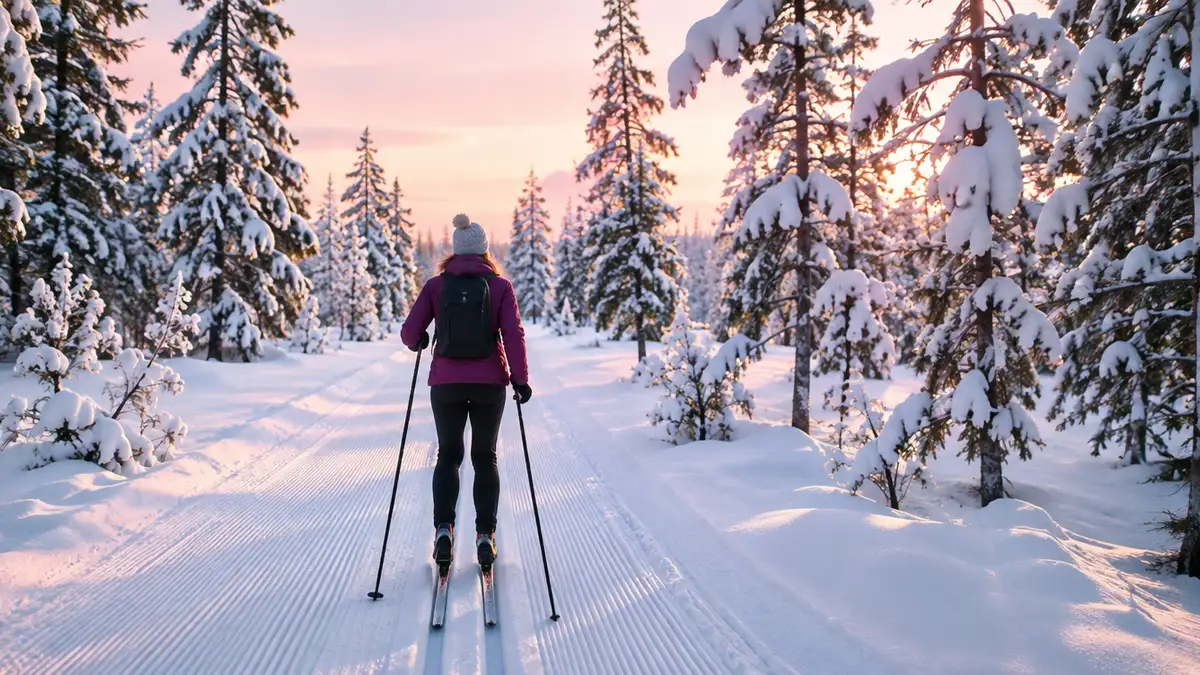
Cross-country (Nordic) skiing is one of the best all-body workouts there is, and one of the most peaceful ways to explore winter landscapes. It needs no lifts, costs much less than downhill skiing, and the risk of serious falls is low.
Classic vs skating
Classic
- Skis move parallel in prepared grooves (tracks)
- Movement like walking or jogging with a glide
- Easier to learn — ideal first choice
- Skis have a grip zone (wax or “fish-scale”/skin pattern)
Skating (skate skiing)
- V-shaped push like ice skating, on a wide groomed lane
- Faster and more intense
- Needs more balance and fitness
- Shorter, stiffer skis and longer poles
Equipment
- Skis: long, narrow and light. Beginners do well with waxless (fish-scale or skin) classic skis.
- Boots: soft and comfortable, attached only at the toe.
- Poles: classic poles reach your armpit; skate poles reach your chin/lips.
- Clothing: lighter than downhill — you’ll sweat. Breathable layers, thin gloves and a headband.
Everything can be rented cheaply at Nordic centres.
How to start
- Take a 1–2 hour lesson — it makes a big difference to technique.
- Start on flat, easy tracks; learn to stop with a snowplough and to climb with a herringbone.
- Many trails require a small trail fee or Nordic pass.
- Ski on the right, overtake on the left, and don’t walk on the tracks.
Where to go
Finland (Levi and Ruka), Norway, Sweden, Austria (Seefeld, Ramsau), Italy (Val di Fiemme, Dolomites), France (Vercors, Jura), Switzerland (Engadin) and many North American resorts have excellent trail networks.